Capel Ladies Club members were very excited about their April speaker, Mark Lane, who was coming to talk to us about The Royal Gardens. BUT – as we found out – there are TWO Mark Lanes, both highly accredited in the gardening sphere. One is the first wheelchair garden designer who also presents “Gardener’s World” from time to time and the other is the Queen’s Head Gardener at Buckingham Palace. Who knew? I think we had all assumed it would be the Gardener’s World Mark Lane, and so when our Chairlady Di Barker and her husband went to collect Mark Lane off the evening train from London prior to the meeting they were looking for a man in a wheelchair! Misunderstandings corrected, and laughed over, OUR Mark Lane arrived in the Library to give his talk, having come straight from work especially to speak to us, and charging us nothing but the price of his train ticket!
H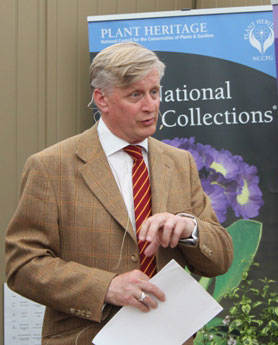 e spoke in a very relaxed style, telling us about the history of the 39-acre garden at Buckingham Palace, and showing photos of the different areas of landscape and planting. There is a large five-acre lawn where the Garden Parties are held, a three-acre lake and a large wildflower area, plus a huge herbaceous border, a rose garden and extensive vegetable plot growing organic produce. The Palace is self-sufficient in its own honey too, having several beehives. There are nearly 500 mature trees and a very comprehensive plant collection. Mark has been Head Gardener at the Palace for over thirty years, and he also oversees the gardens at Clarence House, home to the Prince of Wales. A total of only eight gardeners are employed at these two places which seems surprisingly few as they are kept very busy throughout the year with all the many functions, open days and exhibitions held in the grounds. The Palace grounds are home to many types of wildlife, which bring their own sets of problems – for example large flocks of greylag and Canada geese live by the lake, and of course create a lot of mess which needs to be continually cleared up.
At the end of Mark’s illustrated and interesting talk he answered a number of our questions before leaving to catch his train back to London.
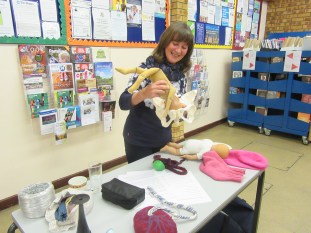 Chairlady Di Barker welcomed a full turnout of members to the first meeting in our 2018 programme, and she announced that as this is our 50th Anniversary Year there were some extra-special events planned to mark it. These would be revealed as the year went on! After introducing the new committee Di welcomed our speaker for the evening, midwife Kim Mason, who had come to tell us all about her work, and of her beliefs and values in helping women to deliver their babies safely.
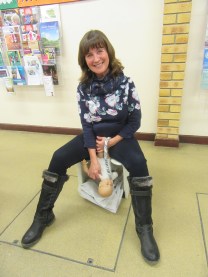 Although retired now, she is still called upon to attend occasional births. Her philosophy is to let the mothers lead when it comes to delivery – it is the midwife’s job to learn when to interfere, and to ensure a calm and comfortable environment where mothers feel able to relax and listen to their bodies. Midwives are there to “catch the baby” as Kim put it, and let women feel empowered by doing it all themselves as far as possible.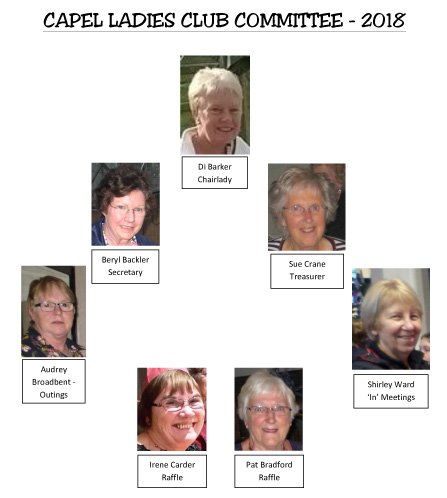


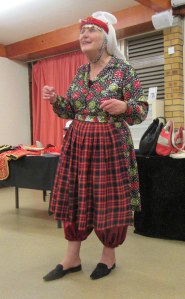
 Capel Ladies were delighted to welcome back Jenny Gibbs, along with her partner Mustapha, to talk about the Ottoman Empire, the Hidden Treasures of Istanbul and a Glimpse into the Harem. Jenny wore a traditional costume with head dress, pantaloons and apron, and a gorgeous sparkly top. She gave us a quick introduction as to how she came to live in Turkey for twenty four years, having fallen in love with the country after a brief holiday there. She lives in a two hundred year old farmhouse, which is apt because – as the Ottoman Empire only ended in 1923 – her home is an Ottoman house.
 The Empire was created in 1299, and from the 15th to 17th centuries was the largest empire in the world. The Ottomans came from Mongolia and while some went to Turkey others went to Finland, which is why there is a similarity in their languages. Eventually Istanbul became the centre of the Empire. The Palace there is magnificent and covers 173 acres. All the roofs are domes, and the walls are covered in ceramic hand-painted tiles. The kitchens are vast as they would have served upwards of 10,000 people. Jenny has visited the palace several times as it takes many days to see it all.
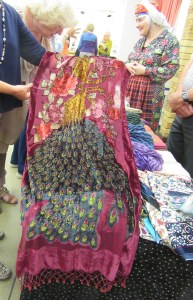 It wasn’t too good to be the son of a sultan either, since only one son could take over when his father died. They often killed all their brothers to ensure no one tried to depose them! Later on this custom, too, died out and the brothers would be put in a special place known as the Cage to live out their lives. Although called a Cage it was a good life with every luxury and plenty of concubines too. However the brothers were never allowed out and frequently went mad.
 Our July meeting saw Jan Derbyshire, chairman of The Shelley Centre for Therapeutic Riding, accompanied by her deputy Chairman Margaret Fowler, come to talk to us about the Riding for the Disabled charity.
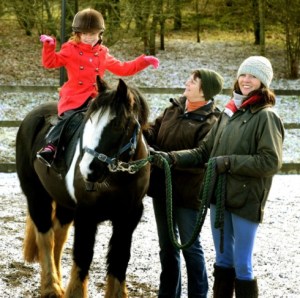 An hour a week led to a day a week, she learnt to lead a horse, then to ride a horse; she trained to be an instructor, then she went on the Committee and eight years ago became Chairman of what is now a Trust.
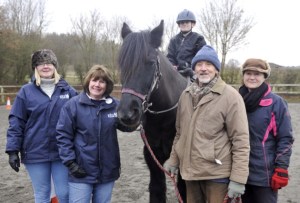 Jan impressed upon us that RDA is a therapy, not just a ride on a horse. Riding uses every muscle in the body, improves internal organs as well as posture, and gives the riders more self-confidence. They also have to try to fit the school curriculum into lessons, using colours, letters and numbers, amongst other things, in the arena. She also told us that many of the Paralympians, like Sophie Christiansen, have been discovered through the RDA.


 Capel Ladies Club