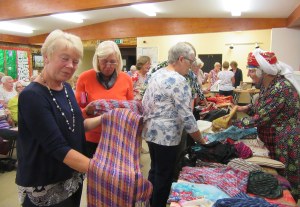
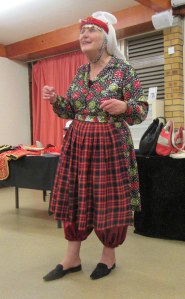
 Capel Ladies were delighted to welcome back Jenny Gibbs, along with her partner Mustapha, to talk about the Ottoman Empire, the Hidden Treasures of Istanbul and a Glimpse into the Harem. Jenny wore a traditional costume with head dress, pantaloons and apron, and a gorgeous sparkly top. She gave us a quick introduction as to how she came to live in Turkey for twenty four years, having fallen in love with the country after a brief holiday there. She lives in a two hundred year old farmhouse, which is apt because – as the Ottoman Empire only ended in 1923 – her home is an Ottoman house.
 The Empire was created in 1299, and from the 15th to 17th centuries was the largest empire in the world. The Ottomans came from Mongolia and while some went to Turkey others went to Finland, which is why there is a similarity in their languages. Eventually Istanbul became the centre of the Empire. The Palace there is magnificent and covers 173 acres. All the roofs are domes, and the walls are covered in ceramic hand-painted tiles. The kitchens are vast as they would have served upwards of 10,000 people. Jenny has visited the palace several times as it takes many days to see it all.
The Harem in the Palace was also very large. Harem means women’s quarters and this is where all the women in the palace lived. The Sultan was allowed four wives, while other men could have seven! These would all be Turkish but his concubines, usually about eight hundred of them, would come from conquered nations. They would be the most beautiful girls, and in the harem they were well educated, taught to play music, dance, sing and do exquisite embroidery. Each girl would have her own servant and there were also about four hundred eunuchs to keep order, so you can understand why it was so large with that many people there! A sad fate awaited these women, however. When a Sultan died all his concubines would be killed – often weighted down with stones and thrown in the Bosphorus! Fortunately this practice died out as the centuries passed.
 It wasn’t too good to be the son of a sultan either, since only one son could take over when his father died. They often killed all their brothers to ensure no one tried to depose them! Later on this custom, too, died out and the brothers would be put in a special place known as the Cage to live out their lives. Although called a Cage it was a good life with every luxury and plenty of concubines too. However the brothers were never allowed out and frequently went mad.
Jenny went on to tell us about some of the buildings in Istanbul including the fabulous mosques, The Grande Hotel de Londres, built for the passengers of the Orient Express in 1892, remains unchanged to this day and is often used by film companies. She also described a vast underground cistern where water had been stored and they had used Greek and Roman columns to support the roof, but many of these were put in upside down! She said it was beautifully cool in there after the heat of the streets.
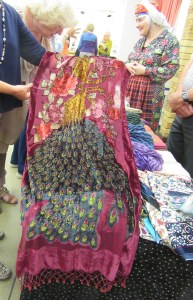
Jenny brought with her examples of Ottoman clothing as well as scarves, tablecloths and bags to sell, all very beautiful and eagerly bought by our members. We look forward to the next time Jenny comes, she is always a delight to listen to.
(Report by Di Barker)
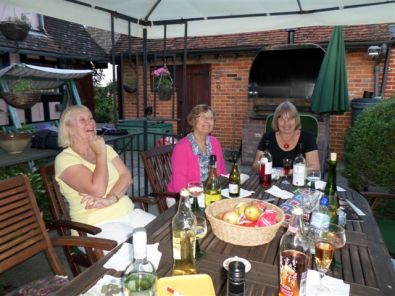
 After all those lovely summer evenings in June and July the night of the Capel Ladies Barbecue turned out to be unsettled, cool and very blustery! However, we were safely tucked away inside a marquee, courtesy of Liz and Tony Gulliver, our hosts, enjoying a delicious spread of barbecued meats and salads, followed by a selection of creamy gateaux, so the weather didn’t affect us in the slightest. We had a tricky quiz from Pat Bradford where we had to match the correct event to the year it happened, and a Lucky Raffle Prize Draw. At the end of the evening Di Barker thanked our hosts and presented them with wine and flowers. The end of another Barbecue, but let’s hope it’s not the end of another summer!
 Our July meeting saw Jan Derbyshire, chairman of The Shelley Centre for Therapeutic Riding, accompanied by her deputy Chairman Margaret Fowler, come to talk to us about the Riding for the Disabled charity.
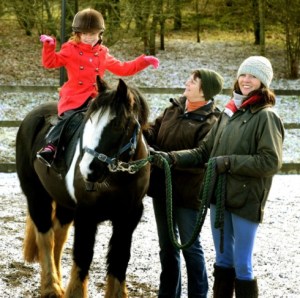 An hour a week led to a day a week, she learnt to lead a horse, then to ride a horse; she trained to be an instructor, then she went on the Committee and eight years ago became Chairman of what is now a Trust.
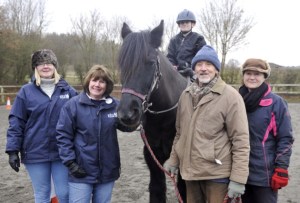 Jan impressed upon us that RDA is a therapy, not just a ride on a horse. Riding uses every muscle in the body, improves internal organs as well as posture, and gives the riders more self-confidence. They also have to try to fit the school curriculum into lessons, using colours, letters and numbers, amongst other things, in the arena. She also told us that many of the Paralympians, like Sophie Christiansen, have been discovered through the RDA.


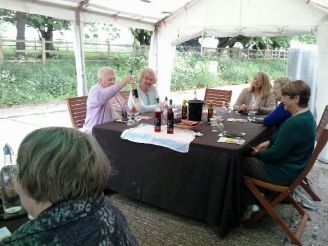
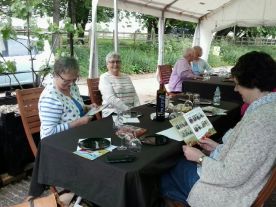 He uses slow, natural methods to make his wines, adding only minimum amounts of sugar, plus yeast, so they taste “full of fruit and deliciously natural” according to him. But the proof of the pudding is in the eating, as they say – and so Capel Ladies were given the chance to try several different wines along with artisan breads from Framlingham, cheeses from “Suffolk Cheeses” plus salamis and rapeseed oil dip.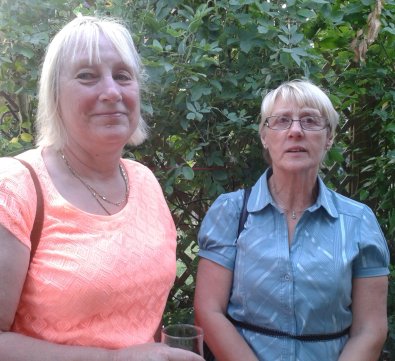
 I will always remember Sue for being the person that made me feel so welcome when I first went along to Capel Ladies. I was very nervous as I walked through the door as I was new to the area and did not know many people but as I entered the library I saw this lady coming towards me with a big smile on her face. She introduced herself and then she started chatting to me and within minutes I was feeling at home. I will always remember Sue for that, she was a lovely person.

 Capel Ladies Club